Dangerous goods are decided by the packing instruction, not by the word battery
Whether a SKU is regulated depends far less on what it contains than on how it is packed, how it is transported and how much of it there is. The same battery is unrestricted in one configuration and fully regulated in another.
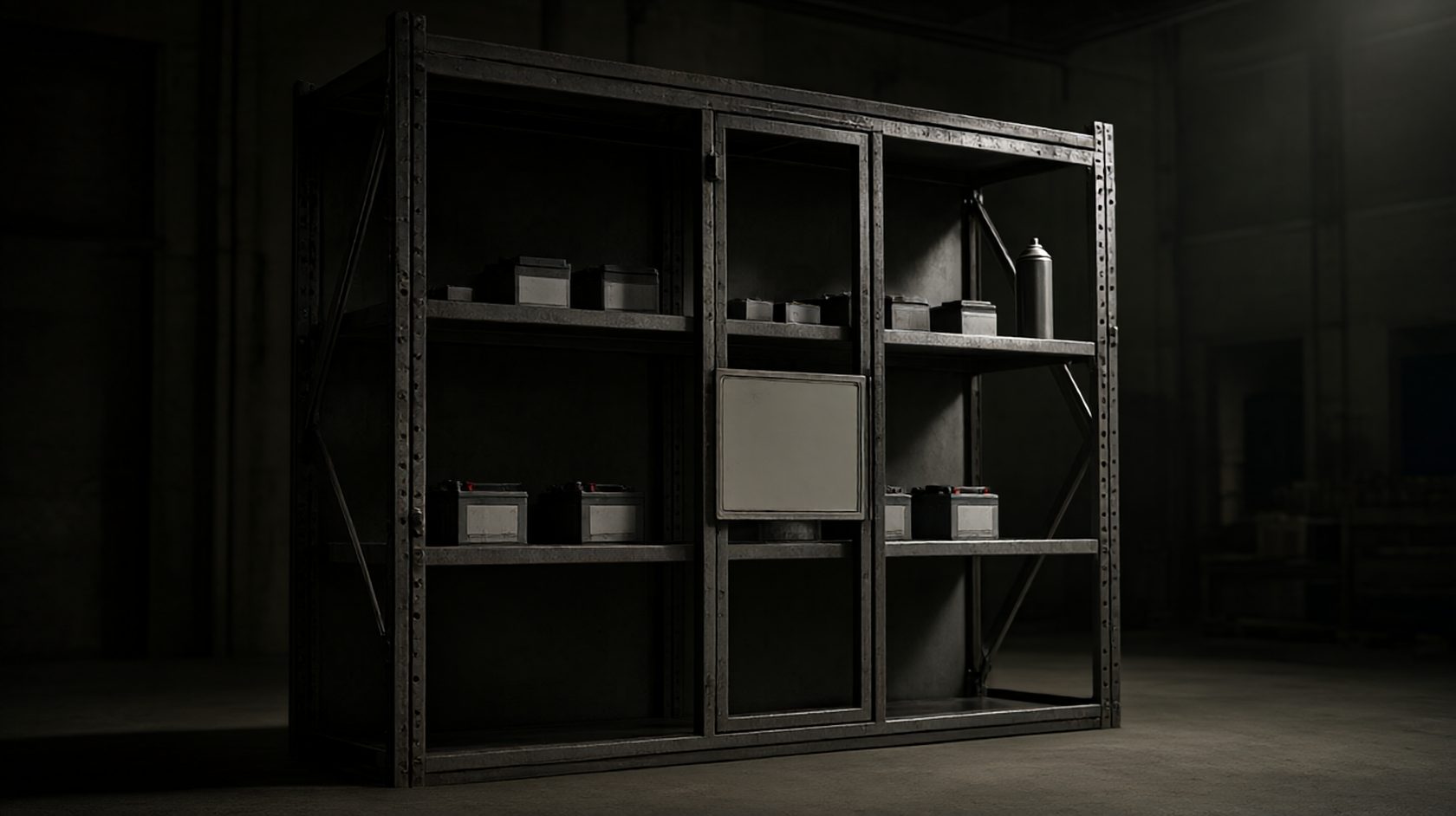
The test is the packing instruction, not the ingredient
A product containing a lithium cell is not automatically a dangerous good. The classification depends on the configuration, the cell chemistry, the quantity and the mode of transport. Two identical power banks can fall under different packing instructions because one ships alone and the other ships inside a device.
This is why the ingest question cannot be a yes or no on a product form. The warehouse needs four attributes: chemistry, configuration, net quantity and the transport mode the order will use. Without all four, any flag is a guess that will be right about half the time.
The practical consequence is that the hazmat attribute lives on the SKU and the shipping attribute lives on the order. A SKU that is unrestricted by air may still be restricted by the specific carrier, and the carrier restriction is a contract term rather than a regulation.
The cost of getting this wrong in the permissive direction is a shipment that is refused at the acceptance counter, which delays the order and may attract a penalty. The cost of getting it wrong in the restrictive direction is a margin that disappears on products that never needed the surcharge.
Three lithium configurations, three regimes
Lithium cells shipped on their own fall under one instruction. Cells shipped with equipment fall under a second. Cells contained in equipment fall under a third. The three carry different state of charge limits, different package marking requirements and different quantity allowances.
Shipped on their own means the battery is the product, which is the most regulated configuration because there is nothing but battery in the box. Shipped with equipment means the battery and the device are in the same package, which allows a higher allowance because the device provides some containment.
Contained in equipment means the battery is installed in the device and the device is the product. This is the least regulated configuration, and it is the one that most consumer electronics sit in without the merchant realising they were ever in scope.
The state of charge limit applies to the shipped alone and shipped with equipment configurations, and it is a percentage rather than a range. A warehouse that receives batteries at full charge for one channel and needs to ship them by air for another has a discharge step in its process, and that step is equipment rather than a rule.
Spare batteries travelling with a device are a separate line
A device plus a spare battery in the same box is a configuration that has its own allowance and its own marking. The spare is counted separately from the installed cell, and the allowance is expressed in numbers of batteries rather than in watt hours alone.
The packing requirement is that the spare must be protected against short circuit, which in practice means the terminals are taped or the battery is in its own blister. Two loose batteries in a box with metal accessories is the failure mode the requirement exists to prevent.
The commercial consequence is that a product sold with a spare battery often ships more cheaply as two parcels than as one regulated parcel, because the regulated configuration attracts a surcharge that exceeds the second parcel's cost at low weight.
The record keeping requirement is that the shipment documentation must state the configuration. A shipment declared as contained in equipment that actually contains a spare is a misdeclaration, and misdeclaration is treated more seriously than non compliance.
Aerosols are governed by capacity and pressure
An aerosol is regulated by its capacity, its internal pressure and whether its contents are flammable. A small non flammable aerosol below the capacity threshold may be unrestricted for surface transport and restricted for air, and the difference is a mode decision rather than a product decision.
Flammability is determined by the propellant and the solvent rather than by the product's intended use. A cosmetics spray with a hydrocarbon propellant is flammable regardless of what it claims on the front of the can, and the safety data sheet is the document that settles it.
The capacity threshold is expressed in millilitres and it is checked against the can's total capacity rather than its net contents. A can with a small net fill in a large container is a large capacity aerosol. This distinction catches merchants who compare fill volumes.
Surface and air regimes diverge most sharply for aerosols. A configuration that is acceptable on a truck may be forbidden on a passenger aircraft, which means a single SKU can require two fulfilment routings depending on the destination distance.
Carrier acceptance is a whitelist, not a regulation
A carrier may refuse a regulated shipment that is legally permitted, and it may accept one that its own network handles badly. Carrier acceptance is therefore a commercial whitelist that sits on top of the regulatory framework, and it varies by carrier, by service and by lane.
The whitelist decides routing rather than compliance. A SKU that is compliant for air and refused by the air carrier must go by road, and the road transit time changes the promised delivery date. The promise, not the compliance, is what the customer experiences.
Whitelists change without notice. A carrier that accepted power banks on a service last quarter may have withdrawn acceptance after an incident elsewhere in its network. A warehouse that assumes acceptance from a rule written a year ago will discover the change at the counter.
The practical control is a routing table keyed on SKU attribute, destination and service, maintained by the merchant and reviewed on a schedule. The table is the operational answer to a regulatory question, and it should be owned rather than inherited.
Storage separation is a building decision
Regulated goods need to be stored apart from other goods, and the separation is physical rather than administrative. A shelf section marked with a sign but adjacent to general stock provides no separation in the event that matters.
The separation requirements typically address three risks: fire load, chemical incompatibility and accidental damage. Batteries and aerosols have different fire profiles, which means they usually cannot share a zone even though both are regulated.
The storage location also determines the pick path. A regulated SKU stored in a remote zone adds travel to every order containing it, and the added travel is a permanent cost. Slotting decisions for regulated goods are therefore constrained by compliance rather than by velocity.
The quantity limit per storage location is a real constraint. A bulk receipt of regulated goods may exceed the permitted quantity for the designated zone, which forces a split across zones or an overflow area, and the overflow area needs to be compliant too.
Markings and documents are one package
The marking on the outside of the parcel and the document inside it have to describe the same thing. A parcel marked as containing lithium cells with a document that describes a device is a discrepancy that will be found at acceptance.
The lithium battery mark carries the UN number, a telephone number for information and, in most configurations, the net quantity. A mark applied without the quantity is incomplete, and a mark applied with a quantity that does not match the shipment is wrong.
The document requirements scale with the regime. Unrestricted configurations often need no document at all, while fully regulated ones need a declaration completed by a trained person. The training requirement is on the signatory rather than on the warehouse, which is why the declaration is often completed outside the building.
Label stock and print durability matter more than they appear to. A mark printed on a thermal label that fades in a hot trailer is an unmarked parcel by the time it is inspected. The specification includes the stock, not only the artwork.
The return leg is harder than the outbound leg
A customer returning a battery containing product faces restrictions that the original shipment did not, because the return is initiated by someone without training and travels on a service that may not accept it. Many returns of this type are simply refused.
The practical resolutions are three: the merchant authorises a disposal at the customer's location with a refund, the merchant provides a compliant return kit, or the product is designed so the battery can be removed and the device returned separately.
Disposal authorisation is the cheapest of the three and it is the most common in practice for low value items. It has a cost in write off and a benefit in avoided freight, and the comparison should be made per SKU rather than as a blanket policy.
A compliant return kit is worth it above a certain value. The kit contains the marking, the packaging and the instruction, and it converts an unshippable return into a shippable one. The break even is roughly where the item value exceeds the kit plus the return freight.
Three refusals that account for most of the failures
Most acceptance refusals come from a missing mark, a watt hour figure that exceeds the allowance for the configuration, and packaging that has not passed the drop test the instruction requires. All three are visible before the parcel leaves.
The missing mark is usually a process gap rather than a knowledge gap. The packer knew the item was regulated and applied the mark to the product rather than to the parcel. The mark belongs on the outer package, and the outer package is built last.
The watt hour overage is usually a sourcing change. A supplier substitutes a higher capacity cell without notice, and the configuration that was acceptable at the old capacity is now over the allowance. This is a master data problem that a receiving inspection would catch.
The packaging drop test is the one that gets skipped because it is expensive to run. The instruction requires the package to survive a drop from a specified height in a specified orientation, and a package that has never been tested is a package that is assumed rather than verified.
The compliance cost belongs in the landed cost
Regulated goods carry costs that do not appear on a freight quote: the surcharge, the additional handling time, the dedicated storage, the trained signatory and the disposal of returns. Each is small per parcel and together they change the margin.
The surcharge is the visible one and it is usually per parcel rather than per kilo, which means it hurts low value orders disproportionately. A regulated accessory sold at a low price point can be margin negative once the surcharge is applied.
Handling time is the invisible one. A regulated parcel takes longer to pack because of the marking and the document check, and that time is labour. A warehouse that quotes a flat per parcel rate for regulated goods is either absorbing the difference or not performing the check.
The correct treatment is a landed cost model that includes all five lines per SKU, updated when the carrier changes its schedule. Merchants who model only the freight rate will find that the regulated tail of the catalogue is unprofitable after the fact rather than before the listing.
The handling route for these configurations, from storage separation through to the acceptance counter, is the hazmat handling for batteries and aerosols in fulfilment, and the routing table is what keeps a compliant SKU off a service that refuses it.
- 01Store chemistry, configuration, net quantity and transport mode on the SKU rather than a yes or no flag.
- 02Distinguish shipped alone, shipped with equipment and contained in equipment.
- 03Apply the state of charge limit by configuration rather than by chemistry.
- 04Protect spare battery terminals and count them separately from the installed cell.
- 05Check aerosol capacity against the container rather than the net fill.
- 06Treat carrier acceptance as a maintained whitelist rather than a regulation.
- 07Key the routing table on SKU, destination and service.
- 08Store regulated goods in a physically separated zone with a quantity limit per location.
- 09Match the outer mark to the document, including the net quantity.
- 10Specify label stock and print durability alongside the artwork.
- 11Decide returns by disposal, kit or battery removal per SKU.
- 12Put the surcharge, handling time, storage and disposal into the landed cost.